Lingchen PLC assists 6-joint robotic arm in loading and unloading materials
In the field of mechanical processing, the automation level of the loading and unloading process of machine tools directly affects production efficiency and labor costs. Although traditional truss manipulators have achieved automation to a certain extent, they have problems such as insufficient flexibility, complex programming, and poor compatibility, making it difficult to adapt to the flexible production needs of multiple varieties and small batches. The customer has proposed a new equipment development requirement based on the existing truss manipulator control scheme, with the core goal of creating a universal, simple and easy to operate six degree of freedom manipulator loading and unloading system, realizing the automation of loading and unloading of one to many CNC machine tools, and achieving the goal of cost reduction and efficiency improvement.
Lingchen Technology provides an integrated solution with LC1000 series PLC, six axis servo system, and touch screen as the core to meet the strict requirements of multi axis synchronous control, high-precision positioning, and simple programming teaching for the loading and unloading equipment of six joint robotic arms. The solution helps machine tool processing achieve automation upgrade.
1
Chip AOI Inspection and Sorting Process Flow Equipment process and application scenarios
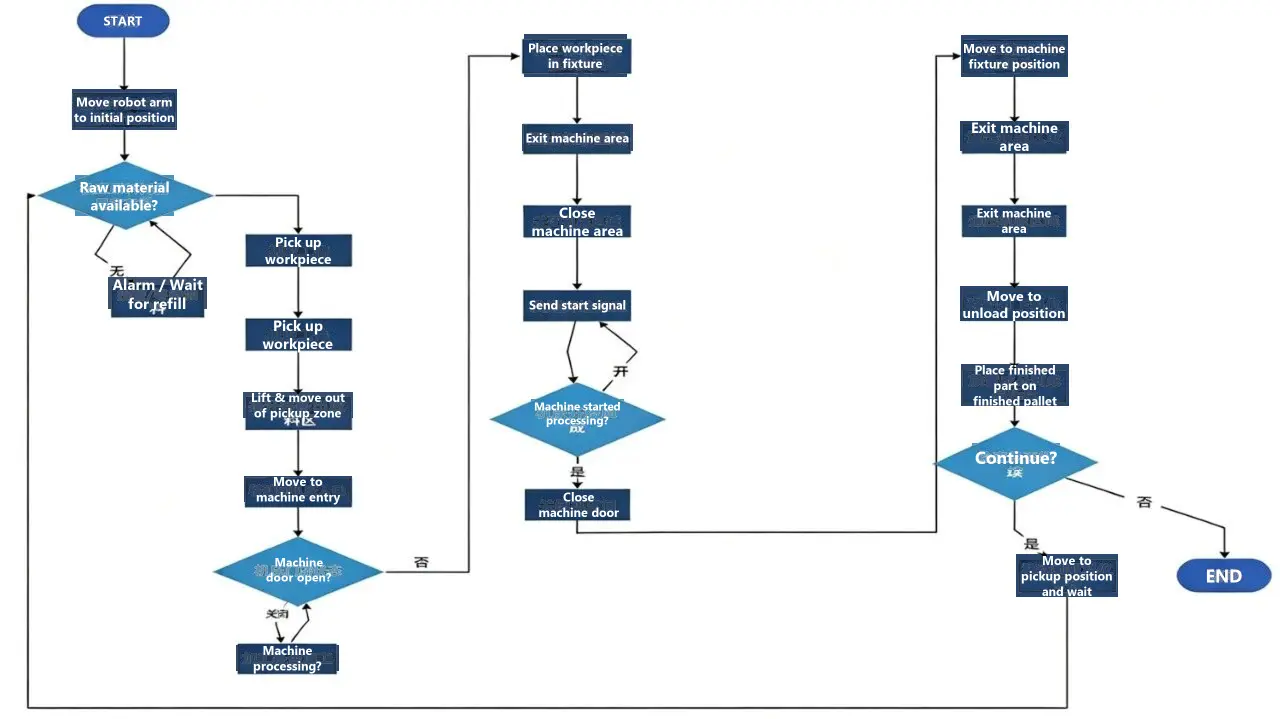
Equipment layout and process flow
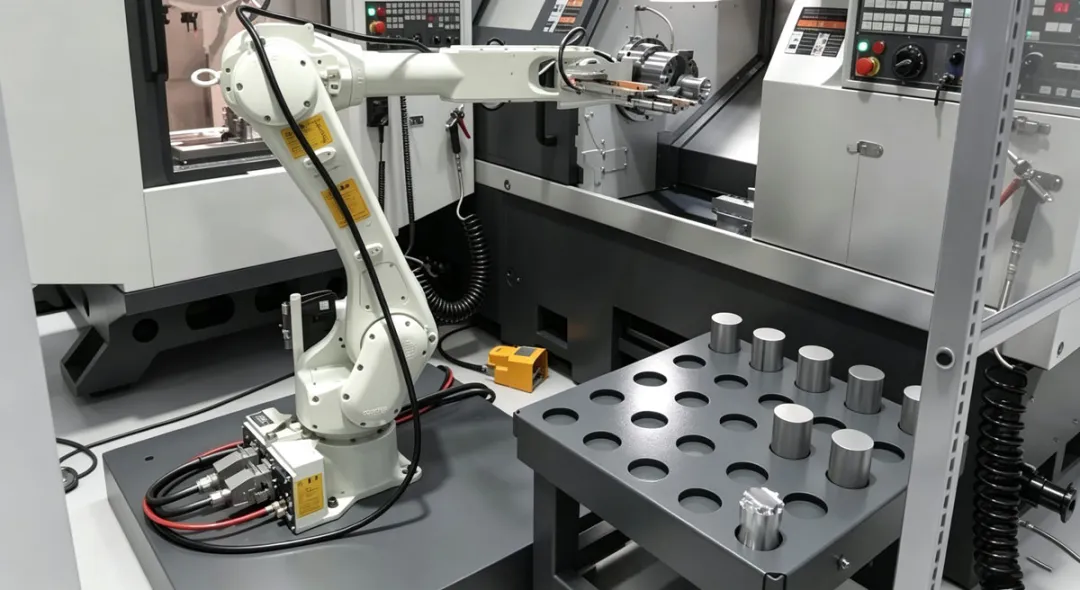
This equipment mainly consists of three parts: tray, 6-joint robotic arm, and machine tool, which realizes the full process automation operation of picking up materials (such as round bar raw materials) from the raw material tray, transporting them to the machine tool processing, and finally placing the finished products on the finished product tray. The equipment layout includes unprocessed product trays and completed product trays, with a 6-joint robotic arm centered to perform handling and loading/unloading tasks. The complete process flow is as follows: the robotic arm retrieves materials from the raw material tray, transports them to the machine tool for processing, and places the finished products on the finished product tray.
Application Areas
This 6-joint robotic arm loading and unloading solution can be widely used in automated loading and unloading scenarios for machine tools such as CNC lathes, machining centers, and grinders. It is suitable for mass production in industries such as automotive parts, 3C electronics, and hardware processing, and is particularly suitable for multi variety and small batch processing needs that require frequent production changes.
2
Customer core needs and technical requirements
performance metrics
The customer has specific performance requirements for the six joint robotic arm control system:
Repetitive positioning accuracy: ± 0.02~± 0.05mm
Terminal TCP maximum line speed: 1.5~3.0 m/s
Maximum joint speed: J1-J2 axis 150-200 °/s, J3-J6 axis 200-400 °/s
Technical implementation difficulties
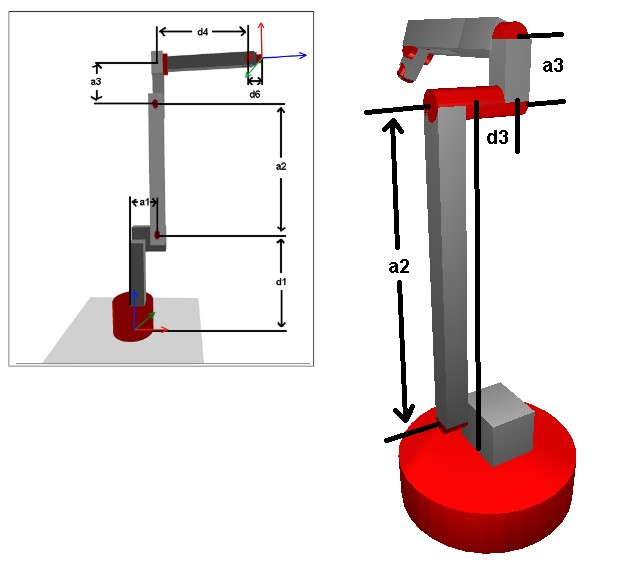
Hand cranked wheel motion tracking: By sending pulse signals through the hand cranked wheel, the forward motion of the robotic arm can be achieved (rotating the hand wheel causes a single joint axis J1-J6 to rotate independently, and the controller calculates and displays the pose coordinates of the end effector in Cartesian space in real time through the DH kinematic model) and reverse motion (after switching modes, the hand wheel controls the end effector to translate along the X/Y/Z axis or rotate around Rx/Ry/Rz, and the controller automatically performs inverse kinematics calculation to drive the coordinated motion of each joint to achieve precise end effector positioning). Manual teaching control.
Pseudo code writing: To reduce the operational threshold, it is necessary to support simplified programming methods, so that on-site personnel can quickly complete program writing and debugging.
Smooth running processing: During high-speed operation, it is necessary to ensure the smoothness of joint movements, avoid shaking and impact, and ensure grasping accuracy and equipment stability.
3
Lingchen Technology Solution
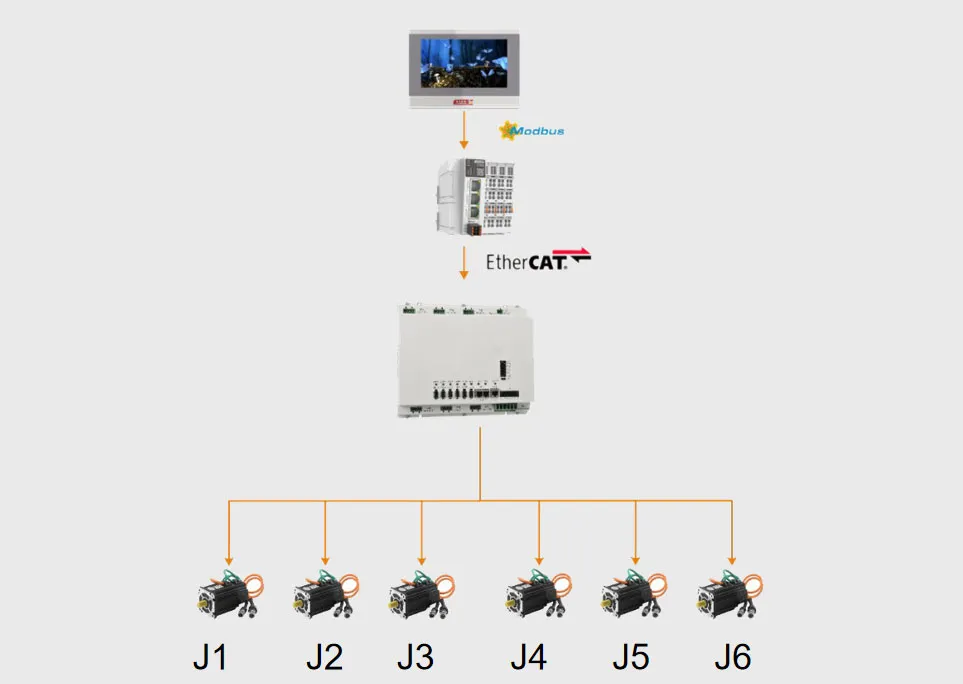
Lingchen Technology provides an integrated solution centered around the LC1000 series PLC, six axis servo system, and touch screen to meet the stringent requirements of the loading and unloading equipment for six joint robotic arms.
hardware configuration
This scheme uses Lingchen LC1000 series PLC as the main control core, equipped with 2 Lingchen IO modules to achieve signal acquisition and execution control, and completes human-machine interaction and teaching programming through Lingchen touch screen. The servo drive system uses one six axis servo driver to uniformly drive six servo motors.
Six axis servo configuration:
J1 base rotation (S-axis): 2.0kW medium inertia servo motor, rated torque 6.4N · m
J2 boom pitch (L axis): 1.5kW medium inertia servo motor, rated torque 4.8N · m, with brake to prevent falling
J3 forearm pitch (U-axis): 1.0kW medium inertia servo motor, rated torque 3.2N · m
J4 wrist rotation (R axis): 0.4kW small inertia servo motor, rated torque 1.3N · m
J5 wrist swing (B-axis): 0.4kW small inertia servo motor, rated torque 1.3N · m
J6 end rotation (T-axis): 0.2kW micro servo motor, rated torque 0.64N · m
Core technology implementation
① Six axis synchronous fully closed-loop servo position control
The controller synchronously reads real-time joint posture data from the six axis high-precision encoder, performs real-time difference calculation with the preset spatial target point, and dynamically synchronously adjusts the output power and operating speed of the six servo motors. Equipped with self weight cancellation and friction suppression algorithms to buffer cantilever shaking and start stop impact, automatically matching the end running speed without manually adjusting parameters axis by axis, it can continuously load and unload materials and handle operations at high speed for a long time, solving problems such as trajectory deviation, body shaking, and inaccurate positioning from the root.
② Adaptive dynamic attitude compensation technology for spatial trajectory
Adopting segmented smooth trajectory planning to achieve precise movement in complex three-dimensional space. When the arm length and joint angle of the robotic arm change, the six axis synchronous linkage adjusts the motion stroke and joint angle in real time, smoothly avoiding workstations and material turning points. Eliminate excessive start stop buffering actions at turning and start stop locations, avoid end shaking and impact on workpieces during high-speed reversing, and ensure stable positioning and uniform posture for grasping workpieces during long-term operation.
③ Six axis synchronous closed-loop dynamic feedback process
Joint encoder posture acquisition → controller multi axis collaborative difference calculation → six axis servo synchronous power adjustment → real-time feedback of actual posture of the robotic arm end, forming microsecond level linkage closed-loop control, ensuring stable and balanced motion trajectory and grasping posture of the robotic arm end, and eliminating the need for manual intervention and correction throughout the high-speed production process.
④ Load adaptive six axis attitude compensation logic
The system real-time recognizes the end bearing weight and changes in the rotation amplitude of each joint, automatically generates a six axis collaborative correction trajectory, drives multiple joints to synchronously adjust spatial position and posture, resolves trajectory inflection points, speed sudden changes and power shocks during start stop moments, and ensures that the end of the robotic arm runs at high speed without overtravel, shaking, or positioning deviation, and the posture height of the workpiece is consistent every time it grabs it.
Integrated control and efficient bus
Built in Robot Motion Library: The controller integrates a native robot motion library, eliminating the need to purchase an independent robot controller, reducing hardware investment, and achieving deep integration of control logic and motion control, resulting in a more streamlined system architecture.
Point to point teaching programming simplifies the debugging process to the extreme: the 6-joint robotic arm only needs to be programmed through point to point teaching, without the need for complex code writing. Operators can quickly get started, greatly shortening the equipment deployment and debugging cycle.
EtherCAT Industrial Bus Architecture: With the Lingchen LC1008 motion controller as the core, unified control of servo, analog, encoder, robot and other equipment is achieved through the EtherCAT bus. Deeply optimize the EtherCAT task resource scheduling mechanism to ensure conflict free and preemptive execution of axis control motion and robot tasks at the underlying level, fundamentally guaranteeing the real-time and stability of system operation.
Quick debugging and easy scalability: fault shutdown debugging time ≤ 1 hour; A single controller can drive up to 32 axes of servo, with strong scalability, easily meeting the needs of future production line upgrades and capacity increases.
4
Application Value
Quality leap
The qualification rate of consumables processing has significantly improved, effectively reducing scrap losses, reducing the cost of reworking defective products, and controlling quality from the production source.
Capacity breakthrough
Realize uninterrupted continuous production, with no downtime during the disk replacement process, and significantly increase equipment utilization rate; Accurate control of production parameters, high-speed and stable operation of robotic arms, and more comprehensive release of production capacity.
cost optimization
The integrated robot controller integrates multiple device functions, eliminating the additional hardware procurement cost of independent motion control cards and robot controllers.
Simplified operation and maintenance
The system architecture is mature and stable, and the fault warning and troubleshooting process is simple and intuitive, allowing for quick problem-solving without the need for complex professional skills; The downtime for troubleshooting and debugging is ≤ 1 hour, significantly reducing the service costs for after-sales maintenance of equipment in the later stage.
Conclusion
The 6-joint robotic arm, as the core execution unit of machine tool loading and unloading automation, directly affects the production line efficiency and product quality in terms of control accuracy, operational stability, and programming convenience. Lingchen Technology takes the LC1000 series PLC+six axis servo system as its core, and provides an integrated solution from the control layer to the execution layer for machine tool loading and unloading scenarios through technological innovations such as six axis synchronous full closed-loop control, spatial trajectory adaptive compensation, load adaptive attitude correction, and point teaching programming.
In the future, Lingchen Technology will continue to deeply cultivate the field of industrial robots, focusing on application scenarios such as machine tool loading and unloading, handling, and assembly. With more comprehensive motion control products and solutions, it will continue to empower China's intelligent manufacturing transformation and upgrading.
About Linchen
- About Us -
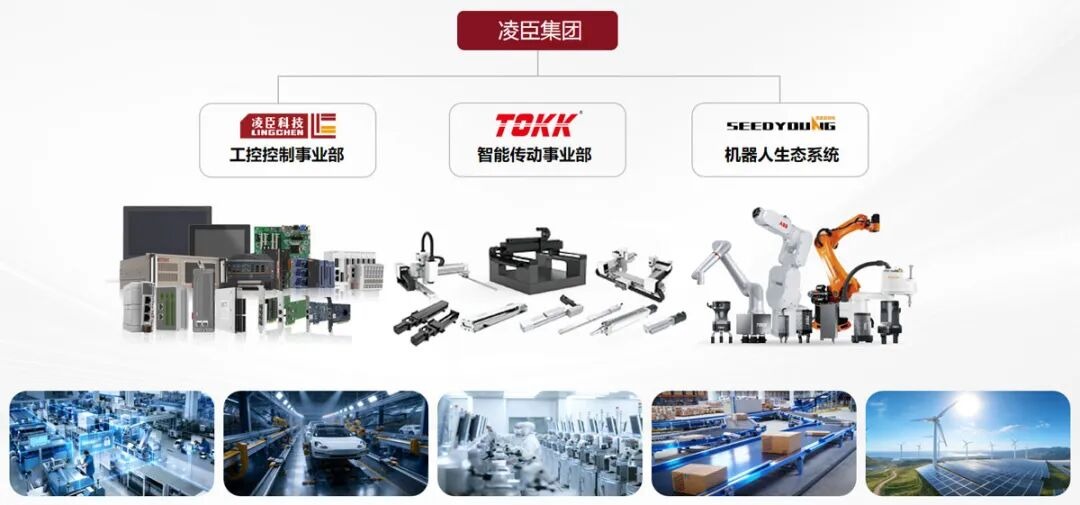
Suzhou Linchen Acquisition Computer Co., Ltd. was established in 2006. It is an enterprise guided by the business philosophy of creating value for customers and achieving win-win cooperation with them. It provides core components and system solutions for various automation equipment such as industrial computers, motion control, test and measurement, machine vision, and robots. Currently, Linchen has two wholly-owned subsidiaries: Suzhou Xunya Automation Technology Co., Ltd. and LingChen Robot (Suzhou) Co., Ltd., which are respectively engaged in robot sales and the R&D, production, and sales of linear transmission products. With outstanding performance in specialization, refinement, differentiation, and innovation, the company was successfully awarded the title of “Little Giant” enterprise of specialization and innovation by the Ministry of Industry and Information Technology in 2025, marking a new level of enterprise development. In the future, it will continue to promote the development and innovation of China's intelligent manufacturing industry.
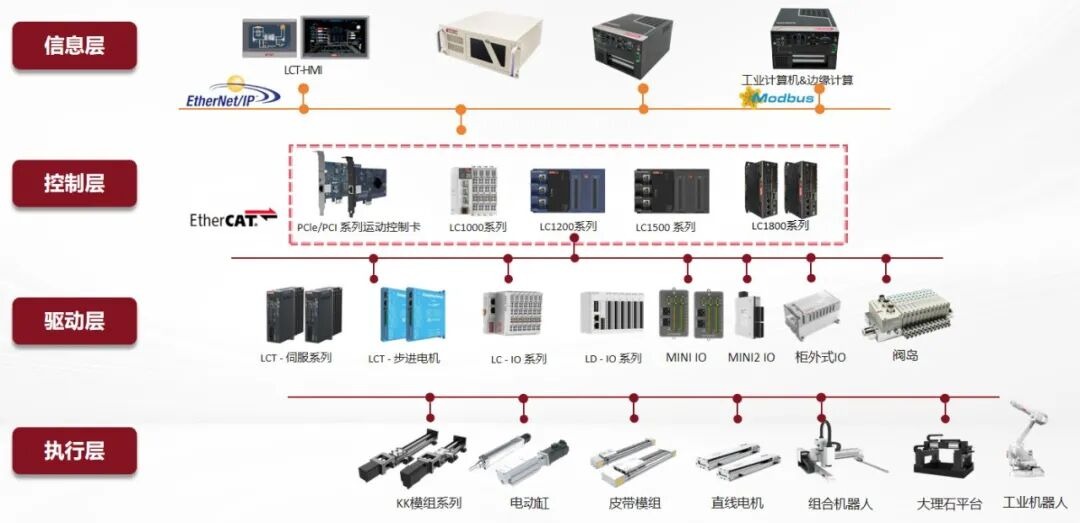
Product System Network
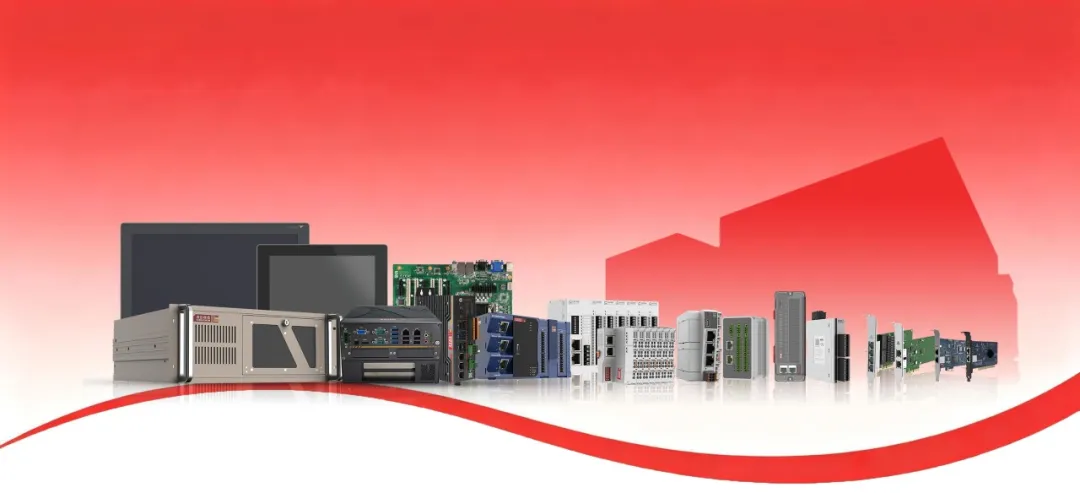
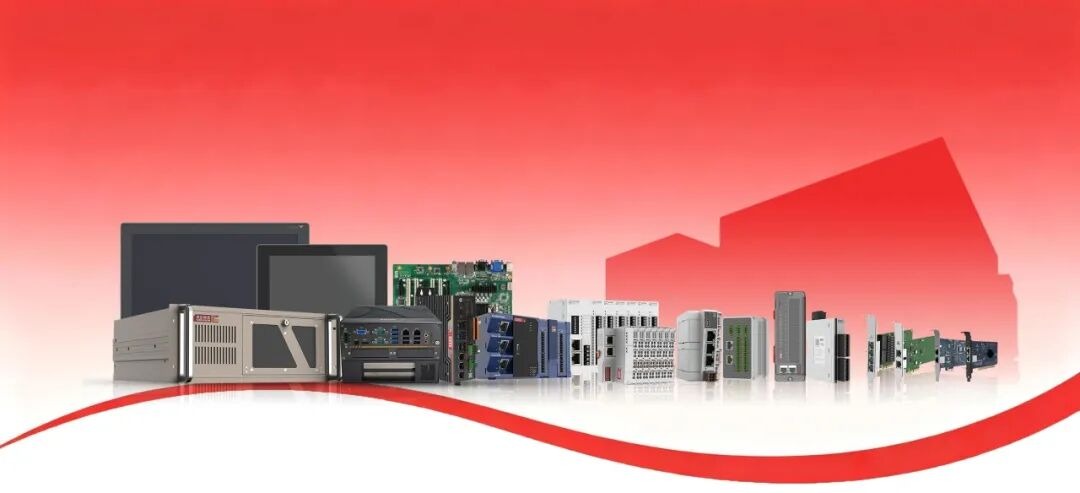
Among the levels included in the automation control network, Lingchen Technology covers all products in the equipment layer, control layer, and information layer
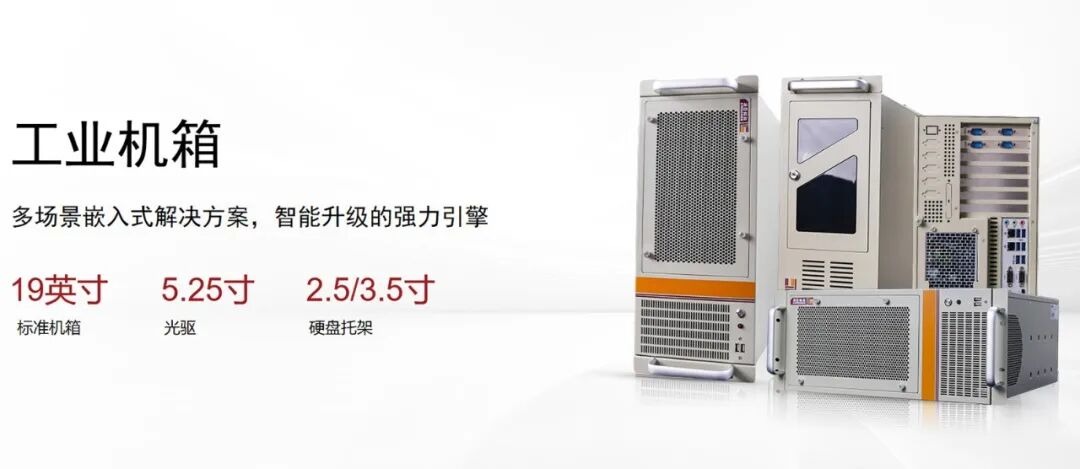
01 Industrial Computers
Linchen industrial chassis, with industrial-grade rugged structure, excellent heat dissipation, and dust-proof design, provide all-around physical protection for the critical computing core, ensuring persistent and stable operation even in harsh industrial environments such as vibration, dust, and wide temperature ranges.
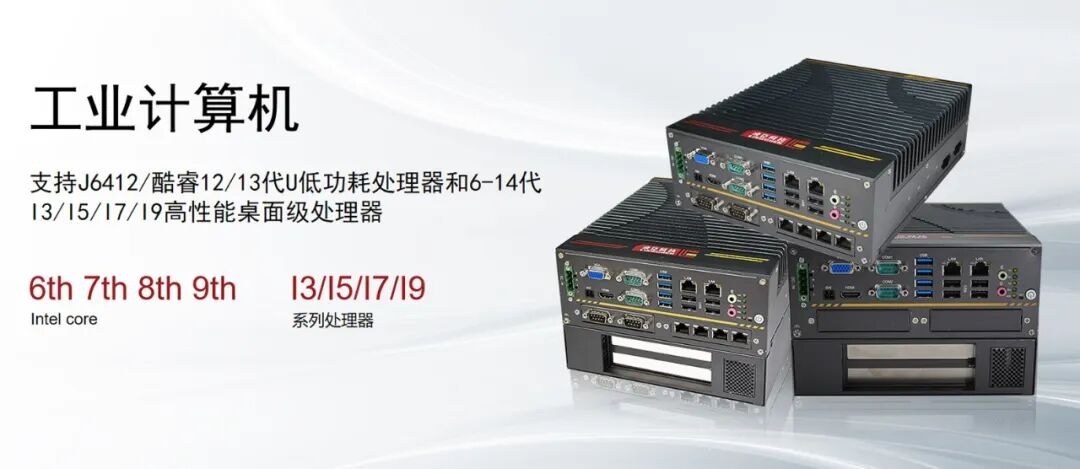
02 Embedded Industrial Computers
Linchen embedded industrial computers feature a compact and rugged industrial design, integrating high-performance computing, rich I/O interfaces, and wide-temperature and wide-voltage adaptability. Built for embedded scenarios such as machine vision, edge computing, and automation equipment, they provide a stable and reliable intelligent core within limited space, empowering intelligent manufacturing and IoT applications.
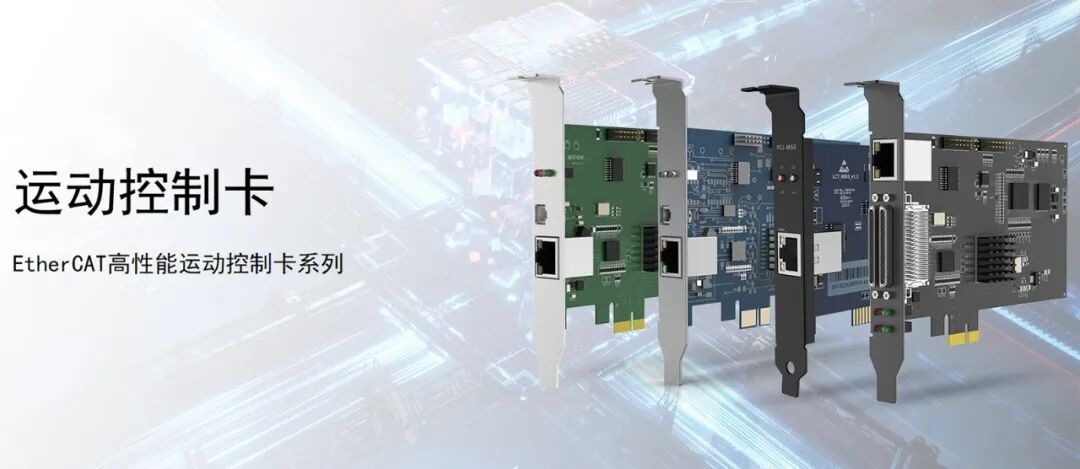
03 Motion Control Cards
Linchen motion control cards can control up to 32 motion axes and simultaneously support control of up to 512 DI points and 512 DO points, with a maximum bus communication cycle of 250µs. In terms of motion, they support single-axis relative motion, absolute motion, jog motion, and drive homing motion; multi-axis interpolation; multi-axis point-table motion; and electronic gear motion, among other functions.
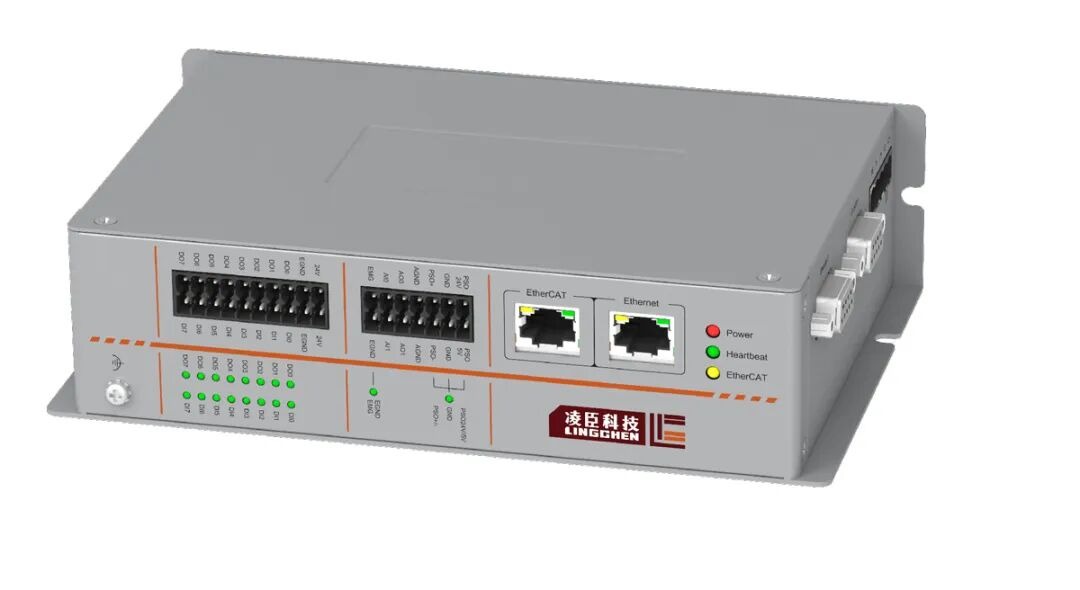
04 LMC Series Motion Controllers
The Linchen LMC series motion controllers are designed based on an open hard real-time kernel (jitter < ±0.3us), thoroughly solving the non-real-time pain points of traditional Windows platforms and ensuring the determinism and immediate response of multi-axis commands. Installation is extremely convenient—connection is completed with just one network cable—and through efficient asynchronous communication technology, synchronous issuance and control of up to 12-axis motion commands within 1 millisecond is achieved.
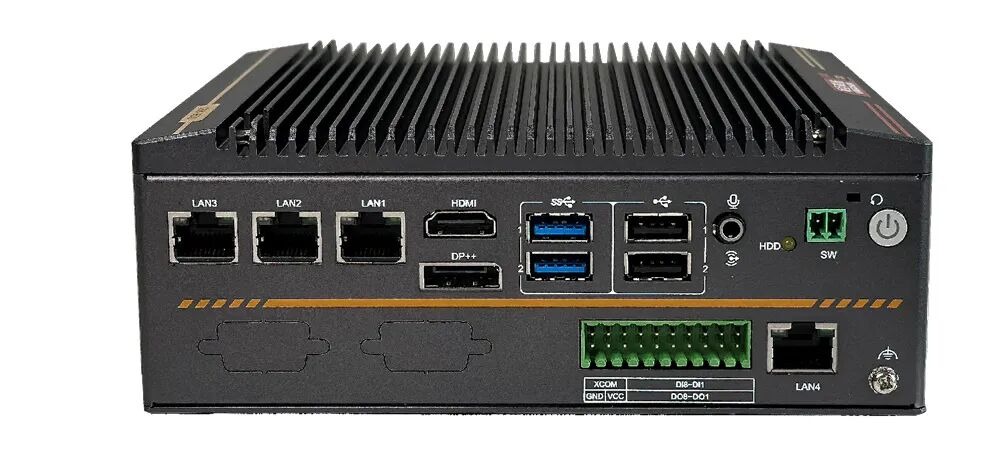
05 NAC Series High-performance Motion Controllers
The Linchen NAC controller is centered on powerful bus expansion capability, supporting 4 EtherCAT masters and enabling precise control of 256 axes per station and a total of 4096 I/O points. Its motion control functions are comprehensive and powerful: it not only supports basic point, linear, and circular interpolation, but also features advanced functions such as five-axis interpolation, trajectory spline smoothing, and dynamic coordinate systems; it integrates vibration suppression, soft landing, and high-precision position comparison output, and with 8 independent interpolation systems and continuous interpolation capability, meets the needs of complex trajectories and high-speed synchronization. The development environment is open and flexible, supporting C++, C#, Python, and other languages, and can be programmed directly within the real-time system, significantly improving integration and debugging efficiency.
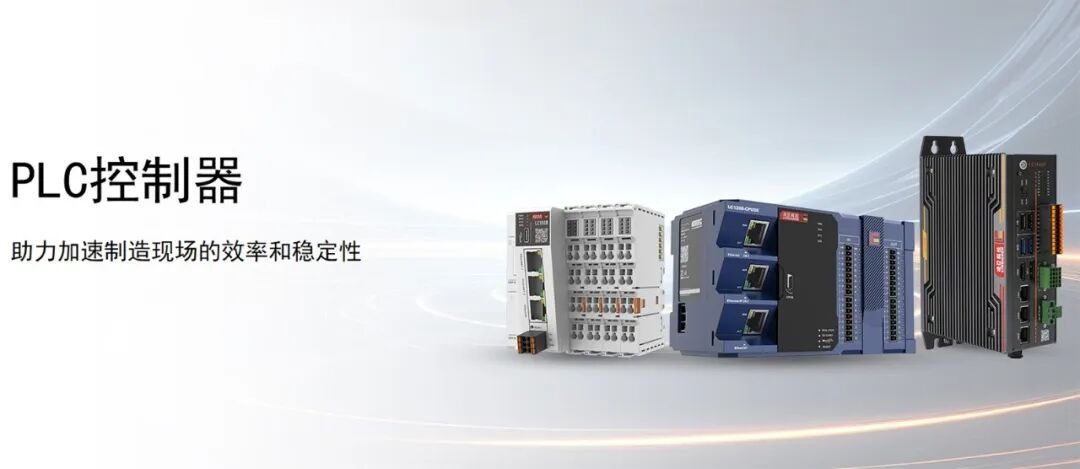
06 PLC Motion Controllers
Linchen PLC controllers strictly follow the PLCopen specification and the IEC-61131-3 international standard, combining high performance, small size, and modular design, with easy development and flexible deployment. They are widely suitable for automation equipment and production line systems in fields such as 3C, lithium batteries, packaging, and printing, and can be extended as network communication nodes in combined production lines such as logistics, automotive, and daily necessities, meeting the needs of internal/external network isolation, high-speed bus communication, and real-time data processing, providing a stable and reliable control core for various industrial scenarios.
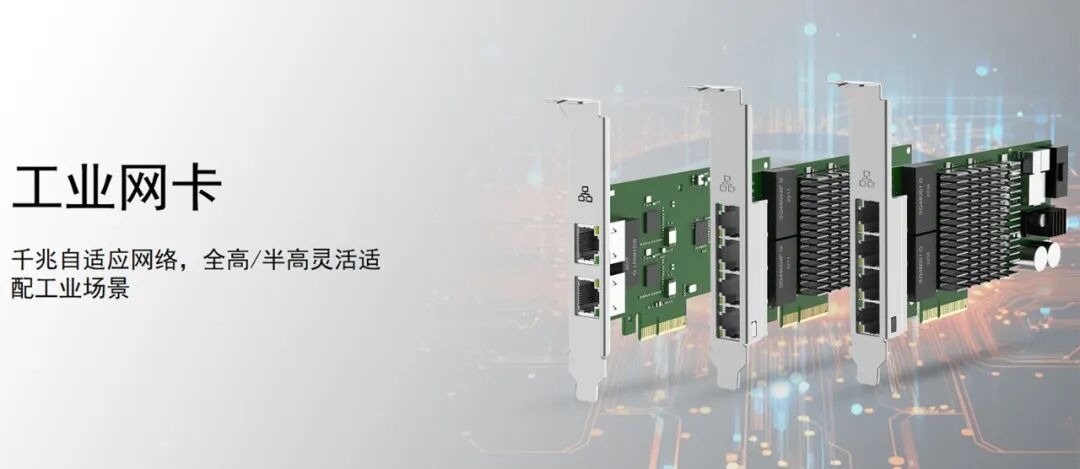
07 Industrial Network Cards
Linchen industrial network cards are designed for harsh industrial environments, featuring 10/100/1000Mbps adaptive capability and providing stable and reliable high-speed network connections. With characteristics such as anti-interference, surge protection, and wide-temperature operation, they are widely used in key scenarios such as motion control, machine vision, and automation systems. The products adopt a flexible installation design (standard full-height bracket, optional half-height bracket), and can be widely integrated into various intelligent manufacturing equipment and industrial networks.
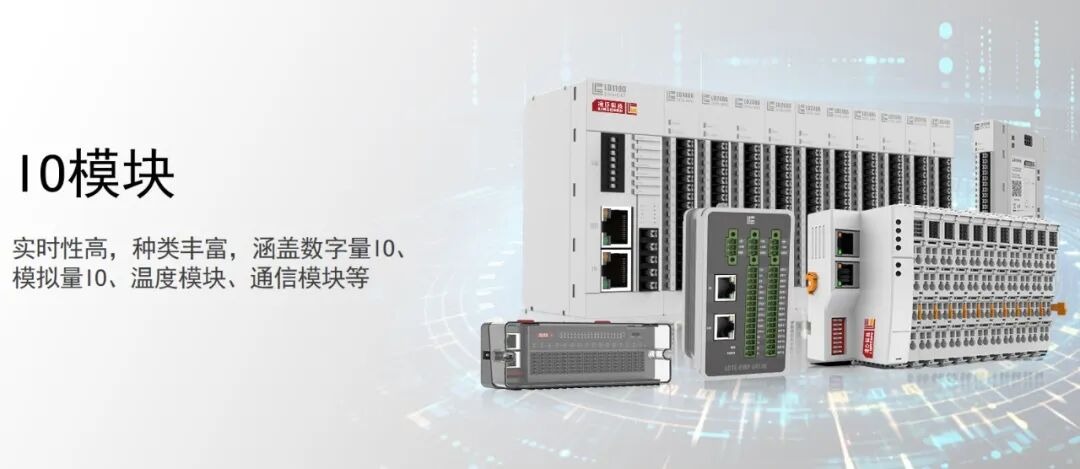
08 IO Modules
Lingchen Technology provides a full series of IO module solutions, flexibly meeting diverse industrial automation needs.
LC/LD Series Expandable IO Modules: Support multiple protocols such as EtherCAT, Profinet, Ethernet/IP, and Modbus TCP, and can flexibly expand acquisition modules for digital, analog, temperature, pressure, pulse, etc., widely used in 3C, lithium batteries, semiconductors, automotive, medical, and other fields.
MINI Series IO Modules: Compact in size and highly real-time, covering digital IO, analog IO, temperature modules, and communication modules, suitable for control and data acquisition scenarios with high requirements for space and real-time performance.
GWS Series Cabinet-external IO Modules: Feature high stability and convenient network wiring characteristics, suitable for distributed layouts, significantly saving system integration time and cost.
The entire series is committed to providing users with reliable, easy-to-integrate, and multi-scenario-adaptable IO module support.